
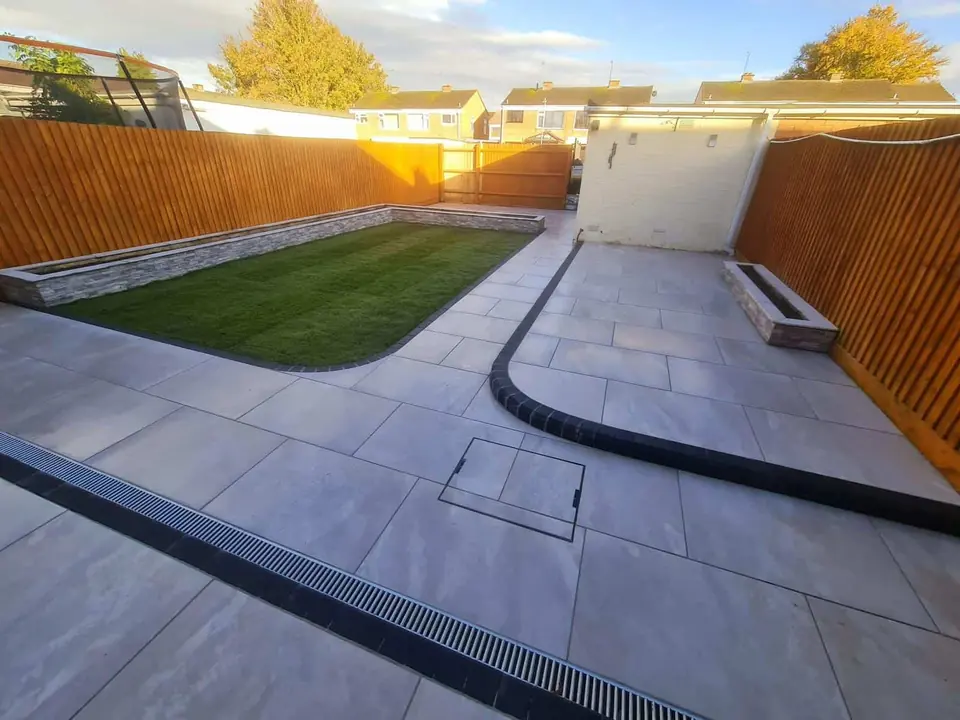
Landscaping Services in Edinburgh
From a single patio to a complete garden transformation, we design and build outdoor spaces across Edinburgh and the Lothians. Every project starts with a free site visit and a detailed written quote, and there’s no deposit to pay.
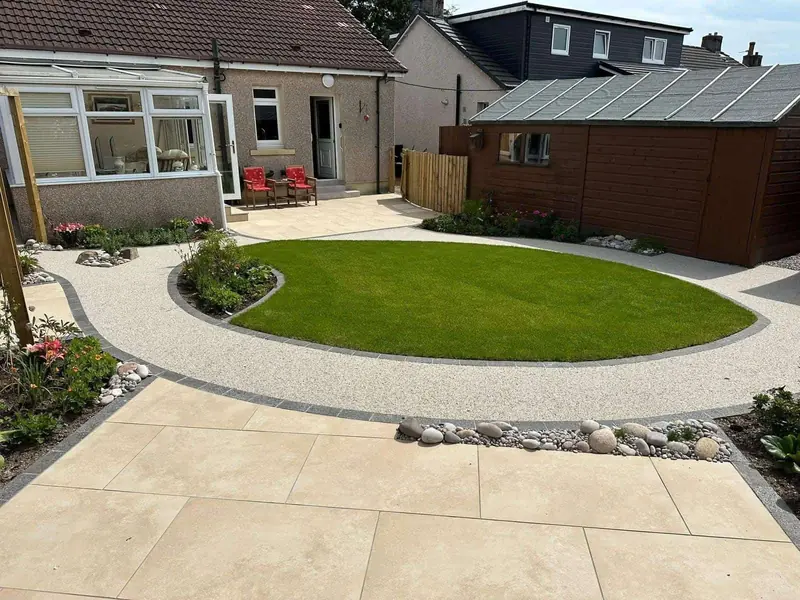 Garden Landscaping
Garden landscaping in Edinburgh
A good garden starts with how you want to use it: somewhere to eat outside, a lawn for the kids, less upkeep, or all three. We plan complete garden makeovers around that brief and build every part of them with our own team, from patios, paths and lawns to walls, raised beds, decking and fencing.
Most Edinburgh gardens come with a challenge of some kind — a slope, heavy ground that holds water after rain, or a shady plot overlooked by neighbouring buildings. We work those into the plan from the start, dealing with levels, falls and drainage first and choosing materials that suit the light and the look of your home.
What’s included
- Ideas and advice at a free site visit
- Removal of old surfaces and lawns
- Excavation, levelling and sub-base preparation
- Patios, paths, lawns and borders built to plan
- Walls, steps, decking and fencing where needed
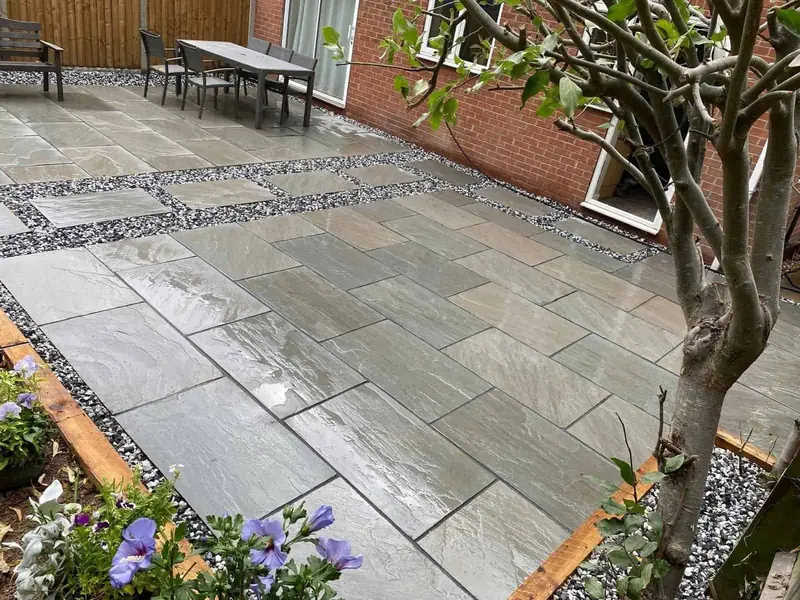 Patios
Porcelain and sandstone patios
A patio has to cope with Scottish rain as well as summer evenings, so we build ours from the ground up. We dig out to the right depth, lay and compact a sub-base, then set the paving with a gentle fall away from the house so rainwater runs off rather than sitting on the surface or heading for your walls.
Porcelain is hard-wearing, resists stains and only needs a wash down, which makes it a favourite for modern homes. Indian sandstone has natural variation in colour that sits well beside traditional stone and brick. We’ll talk you through the look, the upkeep and the cost of each at your site visit.
What’s included
- Porcelain and natural sandstone paving
- Excavation and a compacted sub-base
- Falls and drainage channels where needed
- Steps, borders and edging to finish
- Pointing and a final clean
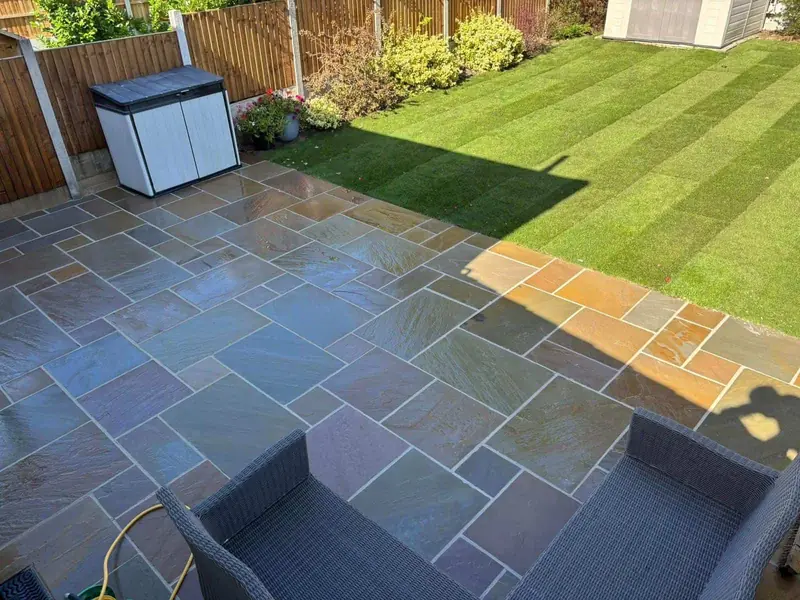 Turfing
Turfing and new lawns
New turf only looks as good as the ground under it. We clear the old lawn and weeds, level the area, bring in topsoil where it’s needed and firm it up before laying the turf with tight, staggered joints so the lawn knits together evenly.
A new lawn needs watering in dry spells until it has rooted, and we’ll explain exactly how to look after it. If part of your garden stays wet or gets very little sun, we’ll tell you honestly whether real grass is the right choice there or whether paving or artificial grass would serve you better.
What’s included
- Removal of the old lawn and weeds
- Levelling, with topsoil where needed
- Turf laid with staggered joints
- Clean edges against paths and patios
- Aftercare advice for the first few weeks
 Artificial Grass
Artificial grass installation
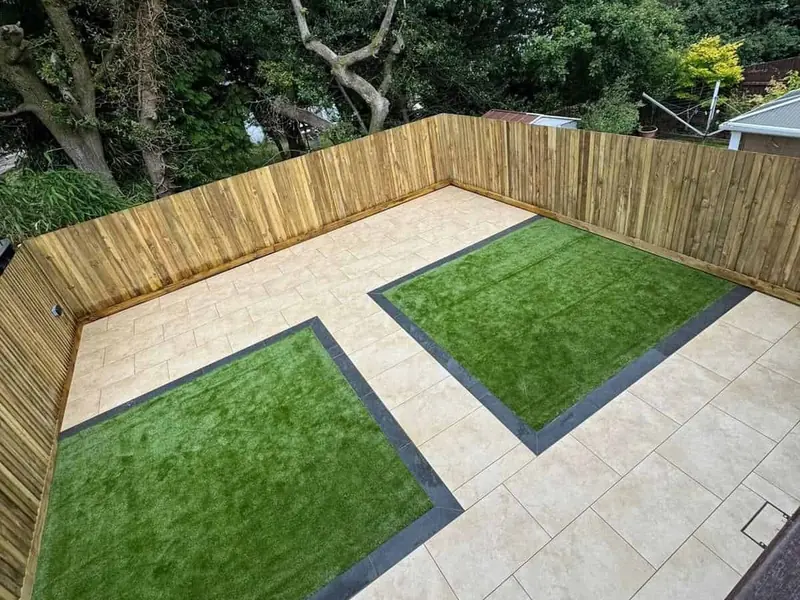
Artificial grass gives you a green lawn all year with no mowing, and it’s a practical answer for spots where real grass struggles: shady corners, busy family gardens, dogs, or ground that turns to mud every winter.
The base is what makes it last. We dig out the old ground, lay a compacted, free-draining sub-base with a fine levelling layer and a weed membrane, then fit the grass with secure edging and tidy joins so it drains well and doesn’t ripple or lift.
What’s included
- Removal of the existing lawn or surface
- Free-draining sub-base and levelling layer
- Weed membrane
- Secure edging and neat joins
- Grass brushed up and ready to use
 Decking
Garden decking
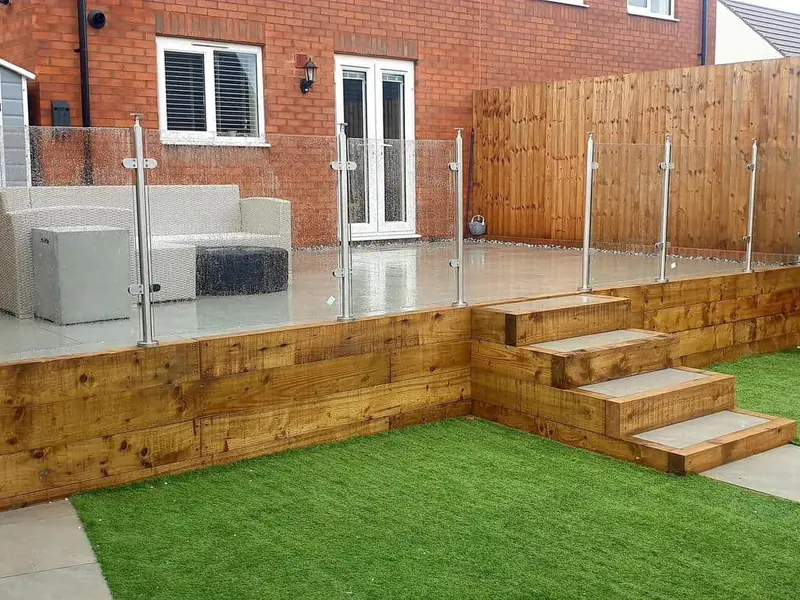
Decking is a great way to create a level seating area on a sloping plot or to step straight out from the house. We build decks on a solid, level frame with air flow underneath, then add steps, balustrades and trims to suit the space.
Timber gives a natural, warm look, while composite boards need little more than an occasional clean with soapy water. We’ll help you weigh up the options for your garden, how you plan to use it and your budget.
What’s included
- Timber and composite decking
- A solid, level sub-frame
- Raised decks for sloping gardens
- Steps and balustrades
- Finishing trims and fascias
 Fencing
Garden fencing
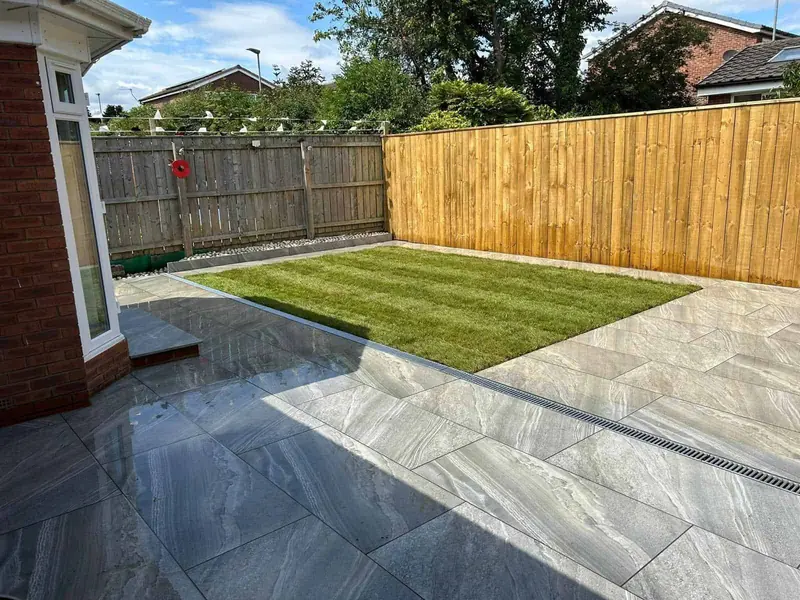
A good fence gives you privacy, keeps children and pets in and frames the rest of the garden. We set posts firmly, keep runs straight and level, and finish neatly against walls and paving so the fence looks right and copes with strong winds.
Whether you’re replacing a tired boundary or enclosing a brand-new garden, we’ll advise on heights and styles for your property. As a general guide, fences over 2 metres high, or over 1 metre next to a road, usually need planning permission, and extra rules can apply to listed buildings and conservation areas.
What’s included
- Removal of old panels and posts
- Posts set firm and level
- Timber fencing to suit your garden
- Neat finish against walls and patios
- Advice on height and style
 Walls & Steps
Garden walls, raised beds and steps
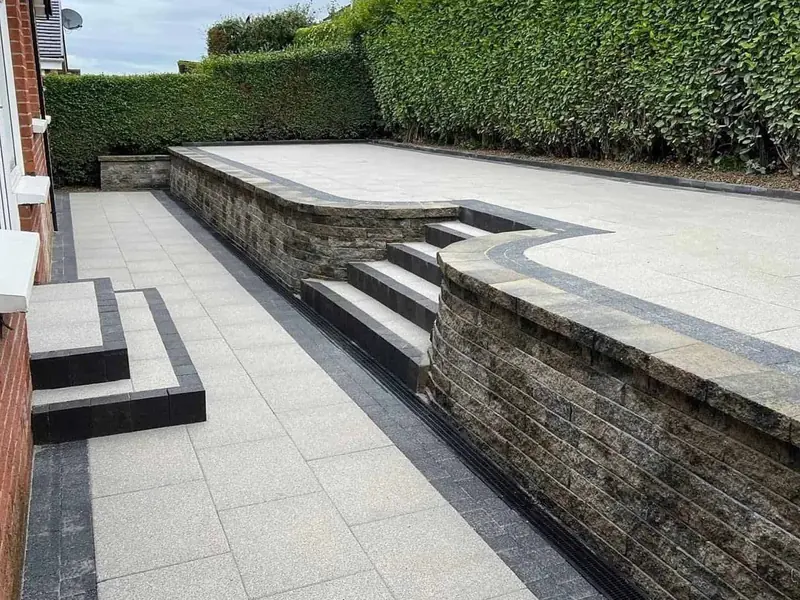
Walls and steps give a garden its shape. We build low garden walls and low retaining walls for sloping ground, raised beds in walling or timber sleepers, built-in seating and steps, matched to your patio and to the house.
Steps need to be comfortable and safe in the wet, so we keep risers even and treads generous, and finish them in the same paving they connect to. Getting levels right at this stage is what makes a sloping garden easy to use.
What’s included
- Garden walls and low retaining walls
- Raised beds in walling or sleepers
- Built-in seating areas
- Garden and front-door steps
- Materials matched to your paving
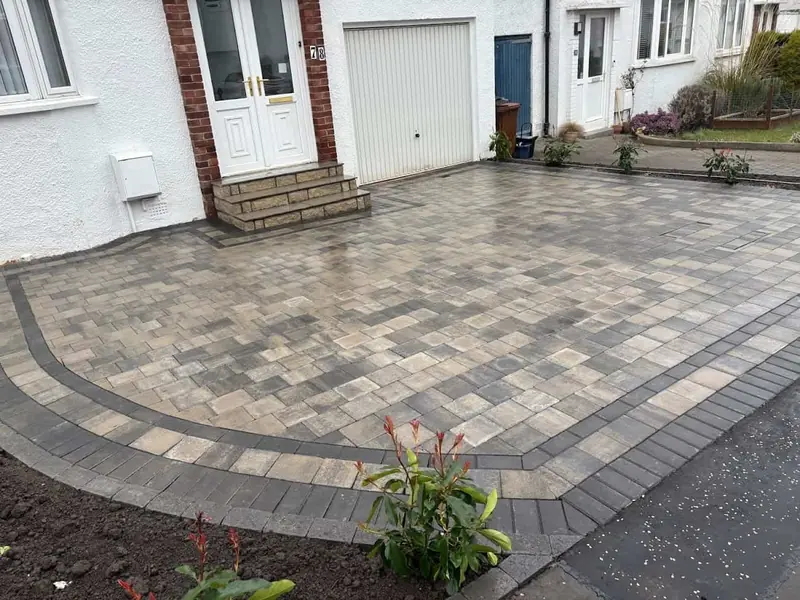 Driveways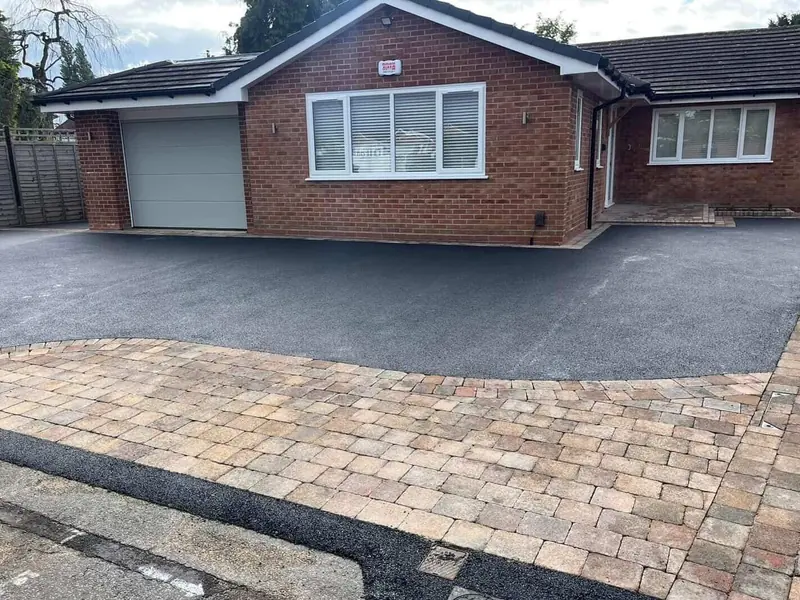
Driveways: block paving, tarmac and gravel
A driveway carries far more weight than a patio, so the preparation matters even more. We remove the old surface, excavate to depth, build and compact the sub-base and fit edge restraints before laying the final surface. As a guide, an average 50m² block paved driveway takes around 5–7 working days.
Block paving offers the widest choice of colours and patterns, tarmac gives a smooth finish that pairs well with a block border, gravel is quick to lay and naturally permeable, and resin bound surfaces give a seamless look. Front driveways usually need to be permeable, or drain onto your own ground, to avoid needing planning permission, and a new dropped kerb needs council approval. We’ll talk you through both.
What’s included
- Block paving driveways
- Tarmac driveways with block borders
- Gravel and resin bound surfaces
- Permeable options and drainage
- Paths, steps and edging to match
What affects the cost of landscaping in Edinburgh?
We price every project individually after a free site visit, because no two gardens are the same. These are the things that make the biggest difference.
Size of the area
Larger areas need more materials, more sub-base and more time, although the cost per square metre often falls as the area grows.
Groundwork and waste
What’s there now affects the price: old slabs, concrete or overgrown lawn all need digging out and taking away before the new work begins.
Levels and drainage
Sloping gardens may need steps, walls or retaining edges, and some sites need drainage channels or soakaways to deal with water.
Materials
Porcelain, sandstone, block paving, tarmac, turf, artificial grass, timber and composite all sit at different price points.
Access
Narrow side paths, steps or no room for machinery mean more is moved by hand, which adds time.
Design details
Curves, borders, patterns, raised beds and built-in seating add character and a little more labour.
Landscaping services: your questions answered
Straight answers on materials, timescales and looking after your new garden.
Can you take on the whole garden, or just one job?
Either. Plenty of customers start with a single job such as a new patio or fence, while others want the whole garden redesigned. When several jobs are planned together we can sequence the work so the groundwork, drainage and finishes all line up.
Porcelain or Indian sandstone — which is better for a patio?
Porcelain is dense, stain resistant and very easy to keep clean, with a consistent modern finish. Indian sandstone is a natural stone with colour variation that suits traditional homes, but it is more porous, so it weathers and needs more cleaning over time. Both last well when they are laid on a proper base.
Should I choose artificial grass or real turf?
Real turf is cooler underfoot, better for wildlife and cheaper to lay, but it needs mowing, feeding and a reasonable amount of sun. Artificial grass stays green all year with very little upkeep and copes with shade and heavy use, provided it sits on a free-draining base. We’ll recommend what suits your garden at the site visit.
How long does a new driveway take?
An average 50m² block paved driveway typically takes around 5–7 working days. That covers removing the old surface, preparing the sub-base, fitting edge restraints, laying the blocks and finishing with jointing sand. Larger or more complex driveways take longer, and we’ll give you a timescale with your quote.
How do I look after new paving or decking?
Block paving benefits from regular brushing and weeding, with fresh jointing sand every two or three years. Resin bound surfaces need occasional brushing and can be pressure washed once a year. Composite decking only needs an occasional clean with soapy water. We give you care advice for your installation when the work is finished.
Let’s talk about your project
Whether it’s one job or the whole garden, we’ll arrange a free site visit and a detailed written quote.